 Get a Quote
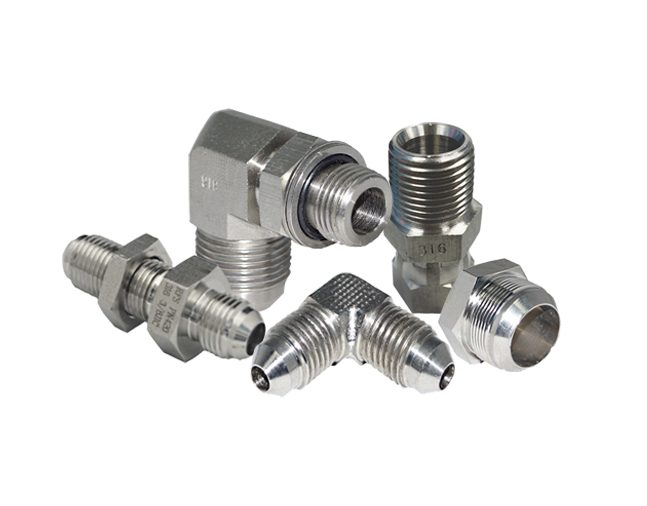
High Pressure Fittings
JIC Fittings
JIC 37° flare fittings to SAE J514 / ISO 8434-2 — a metal-to-metal 37° seat gives a reliable, easily-serviced connection widely used across hydraulic systems.
- Metric & imperial series
- Genuine brands (Eaton Walterscheid, Stauff)
- Ex-stock, fast quotes
Specifications
| Size Range | 1/4" to 1 1/2" |
|---|---|
| Design Standard | SAE J514 / ISO 8434-2 |
| Connection | JIC x JIC JIC x NPT JIC x BSPP |
| Material | Steel SS316 |
| Working Pressure | Up to 430 BAR |
| Origin | Korea |
Specifications are indicative and vary by size and manufacturer. Request the full datasheet for exact dimensions, materials and certification.
Typical applications
- Hydraulic tube and hose terminations
- Pump, valve and cylinder connections
- Instrumentation and impulse lines
Ordering & procurement
Ex-stock in Singapore, dispatched within 3 working days. Material / mill certificates (EN 10204 3.1) and export documentation available. Special sizes and materials sourced on request.
Request a quoteProduct information
JIC fittings are made in accordance with SAE J514 standards . JIC fittings are most commonly known as 37 degree flare fittings , for its 37 degree flare on the seating surface. They are suitable for general hydraulic systems and industrial equipment applications such as fuel oil, deluge systems, and compressed air. The materials used to fabricate JIC fittings are Steel and Stainless Steel . These fittings are widely used in high pressure application, as it can withstand up to 430 Bar working pressure .
Product information
1. Specifications:
JIC Fitting is a range of hydraulic fittings which is made in accordance with SAE J514 and ISO 8434-2 standards. The acronym JIC stands for Joint Industry Council. It is also known as the JIC 37 degrees flare fitting because it has a 37 degrees flare seating surface.
These fittings are used on oil hydraulic systems in many fields (fuel delivery, fuel power application, shipbuilding, mobile hydraulic equipment, etc). A JIC fitting system has three components that make a tubing assembly: fitting, flare nut, and sleeve.
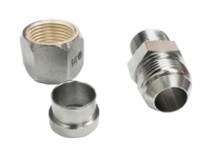
JIC Fitting, Flare Nut & Sleeve
2. Material:
Materials used to fabricate JIC fittings include carbon steel and stainless steel SS31 6L .
3. Sizes:
JIC body and flare nut are available in outer diameter ("OD) sizes between 1/8" to 1 2" . Sleeve has two different reading measurements, metric size (mm) and inch outer diameter ("OD) . Sleeve size is available from 3mm to 50mm and 1/8" to 2" . Fitting sizes are designated by the corresponding outside diameter of the tubing for the various types of tube ends.
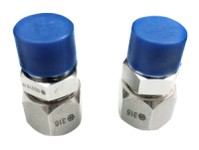
SS316 JIC Fitting
4. Working Pressure:
The standard working pressure of the fittings ranges from 1000 to 5000 psi for different sizes and connections. The minimum burst pressure is four times the working pressure. JIC fittings must be able to withstand twice the working pressure for a period of 1 minute without failure or leakage.
Please take note that the pressure rating of a same fitting may vary when it is connected to different equipment. For example, if a fitting with a low working pressure is connected to a pipe, it will result in an overall even lower working pressure. In all cases, always consider the lowest pressure as the maximum working pressure of the system.
5. How does a JIC Fitting Works:
For tube connections, the assembly procedure starts from the preparation of the tube. First, the nut and sleeve are inserted onto the end of a tube. With the use of a flaring tool, form the end of the tube to 37 degrees. Next, tighten the nut by using a spanner until the nut is tight and the sleeve grips onto the tube.
If the fittings are bench assembled, the gripping action can be determined by rotating the tube by hand as the nut is drawn down. When the tube can no longer be rotated by hand, the sleeve has gripped onto the tube. When this happens, tighten the nut by turning it one full turn. This may vary slightly with different tubing materials, but for general practice, it is a good rule to follow.
6. Configurations of JIC Fittings:
Commonly used connection types consist of:
- JIC/BSPP Male Connector
- JIC/NPT Male Connector
- JIC Union
- JIC/NPT Swivel Male Connector
- JIC/BSPP Swivel Male Connector
7. Differences between JIC and NPT:
Based on the system design, several connection types or threads are available for connecting tubes, hoses, and pipes. For instance, British Standard Parallel Pipe (BSPP), National Pipe Thread (NPT), Joint Industry Council (JIC), ASME , and others. JIC has a 37-degree flare for attaching to hoses or flared tubes. Forging is a technique used in the production of tubes. Metal is molded into desired shapes by compressing pressures during forging. Tube flaring is a cold working forging technique for metals. JIC threads are developed particularly for use in high-pressure systems. NPT threads are among the earliest types of connection threads. They are intended for use in low-pressure systems. They are often used in hydraulic systems to connect ports, tubes, and pipes. The following table shows the differences between JIC and NPT :
| Features | 37° Flare (JIC) | National Pipe Thread (NPT) |
|---|---|---|
| Working Pressure | Very Good | Good |
| Vibration Resistance | Good | Poor |
| Ease of Installation | Good | Good |
| Seal Reliability | Good | Poor |
| Temperature | Excellent | Excellent |
| Reusability | Good | Poor |
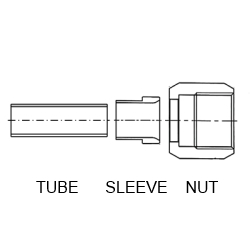
Connection tube and JIC fitting
8. Installation:
There are four steps for JIC fittings installation as below:
STEP 1: Examine the fitting and sealing surfaces for contamination or damage. After that, cut the tube to the required length and flare it to 37 degrees.
STEP 2: Apply a lubricant, such as hydraulic fluid, to the entire surface of the flare and threads.
STEP 3: Insert nut and sleeve in the tube end connection. Before hand tightening, make sure the components are properly positioned. Then, turn the flare nut to access the sealing surface.
STEP 4: Double-check the tightening torque figures to ensure they are correct.
For more information about JIC Fittings, please refer to en.wikipedia.org/wiki/JIC_fitting
9. JIC Fittings Pressure Ratings:
Working pressure rates are based on SAE J514 standards and are capable of 4 to 1 minimum burst pressure ratings.
| Tube OD (Metric) | Tube OD (Inch) | SAE J514 1), in psig | SAE J514 2), in psig | SAE J514 3), in psig |
|---|---|---|---|---|
| 6 | 1/4 | 5000 | 5000 | 4500 |
| 8 | 5/16 | 5000 | 5000 | 4000 |
| 10 | 3/8 | 5000 | 4000 | 4000 |
| 12 | 1/2 | 4500 | 3000 | 4000 |
| 16 | 5/8 | 3500 | 3000 | 3000 |
| 20 | 3/4 | 3500 | 2500 | 3000 |
| 25 | 1 | 3000 | 2000 | 2500 |
| 32 | 1 1/4 | 2500 | 1150 | 2000 |
| 38 | 1 1/2 | 2000 | 1000 | 1500 |
| 50 | 2 | 1500 | 1000 | 1125 |
***Note:
SAE J514 1), in psig is for Unions and bulkheads
SAE J514 2), in psig is for Fittings with pipe threads
SAE J514 3), in psig is for Fittings with female swivel
10. JIC Fittings Assembly Torque:
For JIC flare fittings, it is important to assemble the fittings within the designed torque values to be able to achieve the designed pressure as per SAE J514 standards. Under torque and over torque will result in design pressure loss. Therefore, please refer to the table below for JIC's torque assembly pressure.
| Tube OD (Metric) | Tube OD (Inch) | Assembly Torque (Nm) | Over Torque (Nm) |
|---|---|---|---|
| 6 | 1/4 | 15-16 | 24 |
| 8 | 5/16 | 19-21 | 31 |
| 10 | 3/8 | 24-28 | 42 |
| 12 | 1/2 | 49-53 | 80 |
| 16 | 5/8 | 77-85 | 114 |
| 20 | 3/4 | 107-119 | 160 |
| 25 | 1 | 147-154 | 214 |
| 32 | 1 1/4 | 172-181 | 271 |
| 38 | 1 1/2 | 215-226 | 339 |
| 50 | 2 | 332-350 | 497 |
Note: Over Torque causes deformation of the 37 degrees cone of the male end. Excessive deformation of the cone results in loss of clamping force and pressure loss.
11. JIC Fittings Temperature Rating:
Body Material Temperature Rating JIC Fittings temperature ratings vary in accordance to the body material as per below:
| Stainless Steel | -60°C to 200°C |
|---|---|
| Carbon Steel | -40°C to 150°C |
| Brass | -45°C to 175°C |
Elastomer's Temperature Rating When combing seal material, the temperature rating of seal may become the limiting factor on the fitting's temperature rating. Kindly refer to the temperature rating below:
| NBR | -23°C to 120°C (Default Option) |
|---|---|
| Viton | -20°C to 180°C |
← To go back to High Pressure Fittings page
FAQ Of JIC Fittings
What is the size range of JIC fittings?
The size range of JIC fittings is from 1/4 inches to 1 1/2 inches.
What is the working pressure for JIC fittings?
JIC fittings can withstand working pressure up to 430 bar.
What components are included in a complete set of JIC fittings?
A full collection of JIC fittings consists of a sleeve, nut, and body, with a 37-degree flared seating surface on the body.
What is the function of JIC fittings?
JIC fittings without a sleeve and nut are typically used as a hose adapter on a hose assembly installation to attach to a female swivel end.
How do I know my JIC fitting size?
You can look at the dash size number, which is widely used in the US to make ordering components easier. It is written as the numerator of a fraction with a denominator of 16 always.
Is JIC or NPT better?
JIC. JIC has better working pressure, vibration resistance, seal reliability and reusability rather than NPT.
Specifications
Technical data
| Size Range | 1/4" to 1 1/2" |
|---|---|
| Design Standard | SAE J514 / ISO 8434-2 |
| Connection | JIC x JIC JIC x NPT JIC x BSPP |
| Material | Steel SS316 |
| Working Pressure | Up to 430 BAR |
| Origin | Korea |
| Features | 37° Flare (JIC) | National Pipe Thread (NPT) |
|---|---|---|
| Working Pressure | Very Good | Good |
| Vibration Resistance | Good | Poor |
| Ease of Installation | Good | Good |
| Seal Reliability | Good | Poor |
| Temperature | Excellent | Excellent |
| Reusability | Good | Poor |
| Tube OD (Metric) | Tube OD (Inch) | SAE J514 1), in psig | SAE J514 2), in psig | SAE J514 3), in psig |
|---|---|---|---|---|
| 6 | 1/4 | 5000 | 5000 | 4500 |
| 8 | 5/16 | 5000 | 5000 | 4000 |
| 10 | 3/8 | 5000 | 4000 | 4000 |
| 12 | 1/2 | 4500 | 3000 | 4000 |
| 16 | 5/8 | 3500 | 3000 | 3000 |
| 20 | 3/4 | 3500 | 2500 | 3000 |
| 25 | 1 | 3000 | 2000 | 2500 |
| 32 | 1 1/4 | 2500 | 1150 | 2000 |
| 38 | 1 1/2 | 2000 | 1000 | 1500 |
| 50 | 2 | 1500 | 1000 | 1125 |
| Tube OD (Metric) | Tube OD (Inch) | Assembly Torque (Nm) | Over Torque (Nm) |
|---|---|---|---|
| 6 | 1/4 | 15-16 | 24 |
| 8 | 5/16 | 19-21 | 31 |
| 10 | 3/8 | 24-28 | 42 |
| 12 | 1/2 | 49-53 | 80 |
| 16 | 5/8 | 77-85 | 114 |
| 20 | 3/4 | 107-119 | 160 |
| 25 | 1 | 147-154 | 214 |
| 32 | 1 1/4 | 172-181 | 271 |
| 38 | 1 1/2 | 215-226 | 339 |
| 50 | 2 | 332-350 | 497 |
| Stainless Steel | -60°C to 200°C |
|---|---|
| Carbon Steel | -40°C to 150°C |
| Brass | -45°C to 175°C |
| NBR | -23°C to 120°C (Default Option) |
|---|---|
| Viton | -20°C to 180°C |
Downloads
Catalogues & literature
Having a hard time finding the right parts?
We stock 15,000+ line items and can source specials nobody else can. Get a quotation within 2 hours.