 Get a Quote
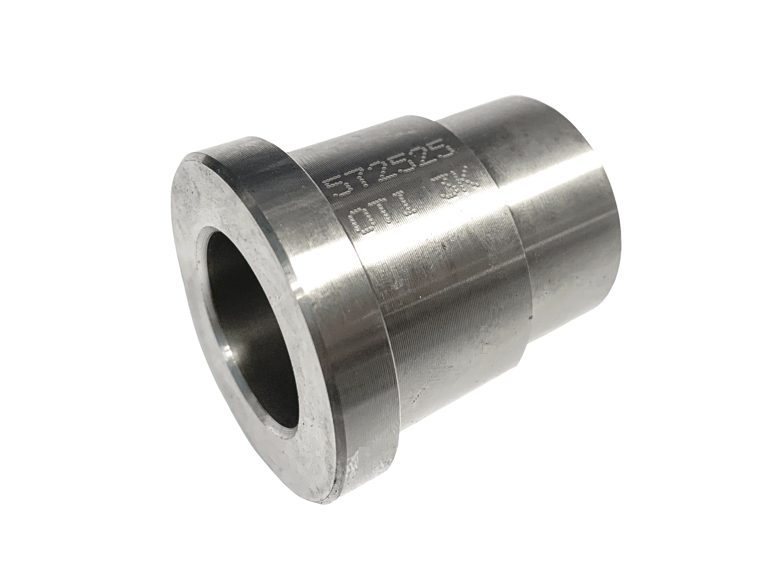
Flanges
SAE Flange
SAE Flange to SAE J518 / ISO 6162 for high-pressure hydraulic connections. Code 61 rates to 3000 psi and Code 62 to 6000 psi; supplied O-ring side, flat (weld) side, or as complete sets.
- Code 61 & Code 62 options
- O-ring / flat / complete sets
- Steel and stainless
Specifications
| Size Range | 1/4" to 5" |
|---|---|
| Design Standard | SAE J518 ISO 6162 |
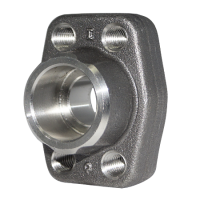
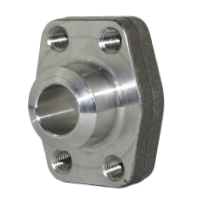
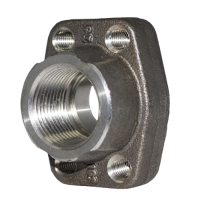
| Connections | Socket Weld Butt Weld NPT BSPP |
| Material | Steel ST52.3 AISI SS316L |
| Working Pressure | Up to 210 BAR 420 BAR |
| Origin | Italy |
Specifications are indicative and vary by size and manufacturer. Request the full datasheet for exact dimensions, materials and certification.
Typical applications
- Pump and motor port connections
- Manifold and cylinder ports
- High-pressure hydraulic pipework on marine and offshore plant
Ordering & procurement
Ex-stock in Singapore, dispatched within 3 working days. Material / mill certificates (EN 10204 3.1) and export documentation available. Special sizes and materials sourced on request.
Request a quoteProduct information
Our SAE flanges ex-stock in Singapore are made to SAE J518 / ISO 6162 standards . SAE flanges are used in oil hydraulic systems. SAE flanges are also known as SAE Code 61 Flanges or SAE Code 62 Flanges. Code 61 represents 3000 PSI working pressure, while Code 62 represents 6000 PSI working pressure. SAE Flanges are available with an o-ring side, flat side, or a complete set , depending on the hydraulic system requirements. The materials used to fabricate SAE flanges are steel and stainless steel. There are four common types of connection for SAE flanges: socket weld, butt weld, NPT, and BSPP .
Different Connections of SAE Flanges
Product information
1. Specifications:
S AE flange is a hydraulic flange made in accordance with SAE J518 / ISO 6162 standards. SAE flanges are normally supplied for oil hydraulic systems in extensive range such as mining, shipbuilding, mobile hydraulic systems and oil & gas. The acronym ‘SAE' stands for the Society of Automotive Engineers, a group founded in 1905 to set standards for numerous sectors in the engineering area. The flange includes 4 bolt connection holes and is widely used around the world.
There are several bolt grades that are matched to install in equipment:
- Bolt grade 8.8: Yellow zinc as standard material with carbon steel flange.
- Bolt grade 10.9: FIZn 240h L is effective for high temperature applications and it is available on request.
- Bolt grade SS304: Standard material with a stainless steel flange.
- Bolt grade SS316: Provide greater corrosion resistance, available upon request.
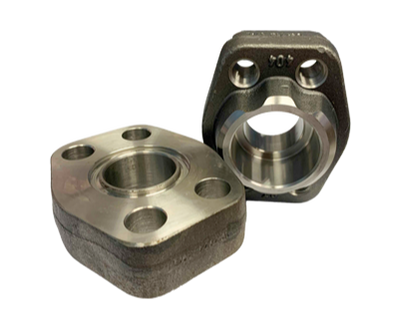
Socket Weld SS316 SAE Flanges 6000#
2. Applications:
SAE flanges are needed in hydraulic systems where precision , reliability , and leak-free connections are crucial. SAE Flanges are specifically designed to ensure seamless compatibility and secure connections between various hydraulic components. They find applications in a wide range of industries, including hydraulic machinery, industrial equipment, aerospace, and automotive. If you are working with hydraulic systems and require a dependable connection point for components, utilizing ISO 6162/ SAE J518 SAE Flanges is essential to ensure the efficient and reliable operation of your system.
Features:
Robust Construction
SAE Flanges are known for their robust construction. They are typically made from high-quality materials such as stainless steel or carbon steel, ensuring durability and longevity.
Precision Machining
These flanges undergo precision machining, resulting in tight tolerances and a perfect fit. This precision is critical to prevent leaks and ensure the efficiency of hydraulic systems.
Leak-Free Design
One of the standout features of these flanges is their leak-free design. The weld neck ensures a secure connection, eliminating the risk of hydraulic fluid leakage.
Versatility
SAE Flanges come in various sizes and pressure ratings, making them versatile for different hydraulic applications.
3. Material:
SAE Flanges are manufactured from two kinds of material, steel ST52.3 and stainless steel AISI SS316L . In order for SAE flanges to be able to be used for high pressure applications, the SAE flange bodies have to be made from normalized forgings.
Stainless Steel AISI SS316L , a low-carbon variation of stainless steel, is renowned for its corrosion resistance and versatility . These properties make it a popular choice for components like flanges in hydraulic systems. Meanwhile, Steel ST52.3 is known for its strength and durability , making it a robust material for hydraulic components. Its high tensile strength and impact resistance make it suitable for demanding applications.
AISI SS316L flanges find extensive use in hydraulic applications where exposure to corrosive environments is a concern. Their resistance to corrosion ensures longevity and reliability in challenging conditions. On the other hand, ST52.3 SAE flanges are preferred in hydraulic systems requiring components capable of withstanding high pressure and mechanical stress. Their durability ensures a longer service life in rigorous operating conditions.
Consider the pressure , temperature , and fluid compatibility requirements of the hydraulic system. Each material has distinct advantages as well as depending on the specific environmental conditions of the hydraulic system. Corrosive environments may favor SS316L, while high-stress conditions may lean towards ST52.3 steel.
| Material | Properties |
|---|---|
| AISI SS316L |
|
| Steel ST52.3 |
|
4. Size Range:
SAE flange are available in nominal sizes ranged from 3/8"NB (DN10) to 5"NB (DN125). The pressure rating of SAE flange can be defined to two series: Code 61 Series and Code 62 Series .
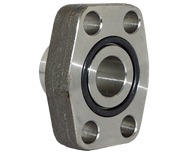
Butt Weld SS316 SAE Flanges 3000# O-ring Side
5. Pressure Rating:
The maximum working pressure for Code 61 series are ranges from 34 Bar to 345 Bar , depending on the sizes. For Code 62 series, the maximum working pressure are 414 Bar .
However, the pressure rating of SAE flanges and connected equipment combination might vary from each other. For example: if a pipe connected to the flange has a lower maximum working pressure, it will result in an overall lower working pressure of the system. Therefore in a system, the item with the lowest pressure will be the maximum working pressure of the system.
6. Connections Type & Configurations:
For the connections of SAE flanges, it is usually available in several types: threaded (NPT / BSPP), welding (Socket Weld / Butt Weld), blind flanges, and split flanges.
SAE flanges are available in two types: Flat Side and O-ring Side. Flat side of SAE flange are SAE flange that come with bolt thread (UNC / Metric) and O-ring side of SAE flange are SAE flange that contains a groove seat to place a rubber O-ring . Flanges with O-ring are has an advantage of prevent leakage as all metal-to-metal flanges are more prone to leakage.
The configurations of SAE flanges are flat side, O-ring side or complete set. A complete set of SAE flanges are a combination of flat side and O-ring side where it forms a seal between the flat surface and O-ring held in a recessed circular groove in the other half. By tightening the bolts, it draws the flat side and O-ring side together and compresses the O-ring.
SAE flange complete set is tightened by using socket head cap screws and spring washers according to the recommended torque value. According to the SAE J518 standard, the lengths of cap screws are usually shorter than the overall length of the SAE flange complete set.
7. Differences between Code 61 and 62 flanges:
SAE Flanges are built in two different code designs which are code 61 and code 62 . The following is a summary table:
| Description | Code 61 | Code 62 |
|---|---|---|
| Series | 3000 | 6000 |
| Size | 3/8” to 5” | 3/8” to 3” |
| Working Pressure (bar) | 34 to 345 | 414 |
ISO 6162 standardizes two main series of flanges used in hydraulic systems: the standard pressure series (Code 61) and the high-pressure series (Code 62) . These flanges have different designations and applications, primarily based on their pressure ratings and sealing methods.
Code 61 flanges are designed for lower to moderate pressure hydraulic systems. They are commonly used in applications where pressures range from 35 to 350 bar (500 to 5000 psi). These flanges are characterized by their oval-shaped port, bolt hole pattern, and a flat-faced sealing surface.
While on the Code 62 flanges are designed for high-pressure hydraulic systems, they are suitable for applications where pressures exceed 350 bar (5000 psi) and can go up to 420 bar (6000 psi) or even higher. These flanges feature a higher-pressure rating compared to Code 61 flanges.
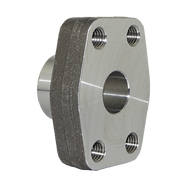
Butt Weld SS316 SAE Flanges 3000# Flat Side
8. Types of O-ring sealing used:
It is a static face seal that seals the flange with a high durometer O-ring . Metal-to-metal interactions on the flange's outer face will produce leakage. As a result, the O-ring sealing is compressed between the flat face and the O-ring face , resulting in a reliable soft sealing. Flanges utilize an O-ring to seal a connection and keep pressurized fluid in place. The following table is the materials used for seals of flanges:
| Description | Viton 90 | NBR 70 / 90 |
|---|---|---|
| Equivalent | FKM | BUNA-N |
| Temperature Range (⁰C) | -26 ⁰C to 205 ⁰C | -34 ⁰C to 121 ⁰C |
| Non-Recommended Application |
|
|
| Recommended Application |
|
|
9. How to assemble SAE Flanges:
SAE Flanges are used for high pressure hydraulic applications. In order to use and assemble SAE Flanges safely, it is important to know the right procedures and torque range for assembly.
Because of the high pressure, it is important to note that every hydraulic or pneumatic system requires some form of fitting installation for completion. Proper fabrication and installation are essential for leak free performance, the overall efficiency, and general appearance of any system. Do watch our YouTube video and our instructions below carefully!
Below are the instructions for assembly of SAE Flanges:
STEP 1
- Ensure the sealed surface is free from scratches and contamination.
- Lubricate the O-ring surface with system fluid or a compatible lubricant.
STEP 2
- Position the flange.
- Place the washer on the cap screws and bolt them through the bolt holes.
STEP 3
- Tighten the cap screws by hand.
- Torque the cap screws gradually in a diagonal sequence to the level in the torque table below.
STEP 4
- Tighten the cap screws according to the torque table below.
3000 PSI Series (Code 61) Flange Recommended Screw Torque Table
| Metric Size | Flange Size | Screw Thread | Screw Torque (NM) |
|---|---|---|---|
| 13 | 1/2" | M8 | 32 |
| 19 | 3/4" | M10 | 70 |
| 25 | 1" | M10 | 70 |
| 32 | 1 1/4" | M10 | 70 |
| 38 | 1 1/2" | M12 | 130 |
| 51 | 2" | M12 | 130 |
| 64 | 2 1/2" | M12 | 130 |
| 76 | 3" | M16 | 295 |
| 89 | 3 1/2" | M16 | 295 |
| 102 | 4" | M16 | 295 |
| 127 | 5" | M16 | 295 |
6000 PSI Series (Code 62) Flange Recommended Screw Torque Table
| Metric Size | Flange Size | Screw Thread | Screw Torque (NM) |
|---|---|---|---|
| 13 | 1/2" | M8 | 32 |
| 19 | 3/4" | M10 | 60 |
| 25 | 1" | M12 | 60 |
| 32 | 1 1/4" | M12 | 92 |
| 38 | 1 1/2" | M16 | 150 |
| 51 | 2" | M20 | 150 |
| 64 | 2 1/2" | M24 | 150 |
| 75 | 3" | M30 | 295 |
FAQ Of SAE Flanges
What is the size range of hydraulic SAE flanges?
The size range of hydraulic SAE flanges is from 3/8 inches to 5 inches.
What are the functions of hydraulic SAE flanges?
SAE Flanges also can be applied to connect pipe, hose, tube, or equipment. It can connect
pipe sizes up to 5 inch and ease of disassembly through use of split flange.
What are the differences between the 4-bolt hydraulic sae flanges?
Bolt grade 8.8: Yellow zinc as standard material furnished with carbon steel flange.
Bolt grade 10.9: FIZn 240h L suitable for higher temperature application, available upon request.
Bolt grade SS304: Standard material furnished with stainless steel flange.
Bolt grade SS316: Higher corrosion resistance, available upon request.
Which type of O-rings are used for hydraulic flanges?
O-ring sealing. It is compressed between the flat face and O-ring face, providing a reliable soft sealing.
What is the working pressure for code 61 and code 62 flanges?
The working pressure of code 61 flanges is from 34 to 345 bar while code 62 flanges is from 200 to 414 bar.
What types of connection can be used for hydraulic sae flanges attached to pipes?
Threaded end (NPT or BSPP) and welding end (socket weld or butt weld).
Specifications
Technical data
| Size Range | 1/4" to 5" |
|---|---|
| Design Standard | SAE J518 ISO 6162 |
| Connections | Socket Weld Butt Weld NPT BSPP |
| Material | Steel ST52.3 AISI SS316L |
| Working Pressure | Up to 210 BAR 420 BAR |
| Origin | Italy |
| AISI SS316L | Excellent corrosion resistance. Excels in environments with high moisture and chemical exposure. Lower tensile strength compared to steel. |
|---|---|
| Steel ST52.3 | Exhibiting good corrosion resistance, it may require additional protective measures in corrosive environments. Boasts high tensile strength and toughness, suitable for heavy-duty hydraulic applications |
| Description | Code 61 | Code 62 |
|---|---|---|
| Series | 3000 | 6000 |
| Size | 3/8” to 5” | 3/8” to 3” |
| Working Pressure (bar) | 34 to 345 | 414 |
| Description | Viton 90 | NBR 70 / 90 |
|---|---|---|
| Equivalent | FKM | BUNA-N |
| Temperature Range (⁰C) | -26 ⁰C to 205 ⁰C | -34 ⁰C to 121 ⁰C |
| Non-Recommended Application |
|
|
| Recommended Application |
|
|
| Metric Size | Flange Size | Screw Thread | Screw Torque (NM) |
|---|---|---|---|
| 13 | 1/2" | M8 | 32 |
| 19 | 3/4" | M10 | 70 |
| 25 | 1" | M10 | 70 |
| 32 | 1 1/4" | M10 | 70 |
| 38 | 1 1/2" | M12 | 130 |
| 51 | 2" | M12 | 130 |
| 64 | 2 1/2" | M12 | 130 |
| 76 | 3" | M16 | 295 |
| 89 | 3 1/2" | M16 | 295 |
| 102 | 4" | M16 | 295 |
| 127 | 5" | M16 | 295 |
| Metric Size | Flange Size | Screw Thread | Screw Torque (NM) |
|---|---|---|---|
| 13 | 1/2" | M8 | 32 |
| 19 | 3/4" | M10 | 60 |
| 25 | 1" | M12 | 60 |
| 32 | 1 1/4" | M12 | 92 |
| 38 | 1 1/2" | M16 | 150 |
| 51 | 2" | M20 | 150 |
| 64 | 2 1/2" | M24 | 150 |
| 75 | 3" | M30 | 295 |
Downloads
Catalogues & literature
Catalogue
Watch
Product video
Having a hard time finding the right parts?
We stock 15,000+ line items and can source specials nobody else can. Get a quotation within 2 hours.