 Get a Quote
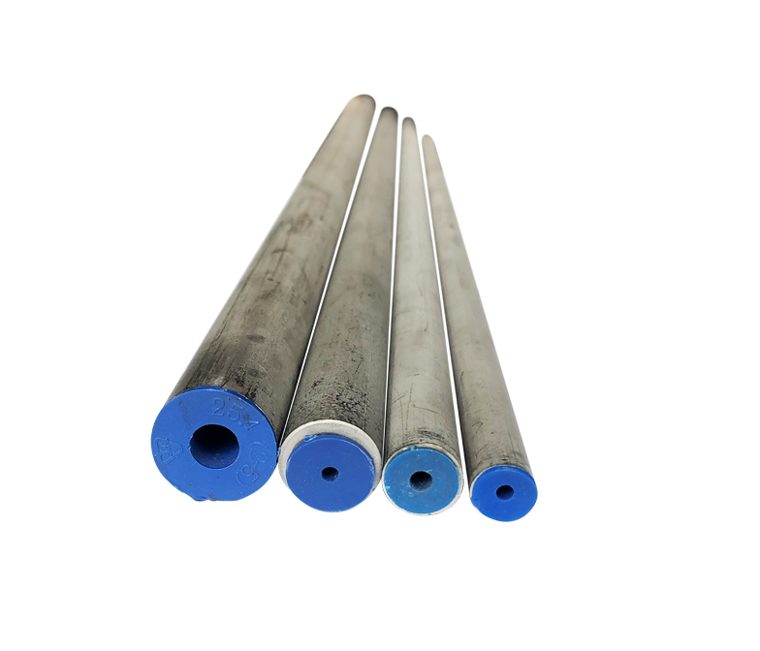
Pipes and Tubes
Stainless Steel Tubes
Seamless and welded stainless steel tubes to ASTM A269 / A213 in TP316 and TP316L — the workhorse tube for hydraulic and instrumentation lines where corrosion resistance matters. Bright-annealed finish, close OD/wall tolerances for reliable compression- and bite-type fitting connections.
- Held ex-stock in common sizes
- Mill / material certificates available
- Cut lengths and full bundles
Specifications
| Size Range (Metric) | 4 MM to 60 MM |
|---|---|
| Size Range (Inch OD) | 1/4" to 2" |
| Dimension Standard | ASTM A213 / A269 (A.W.) |
| Material | TP316 / TP316L |
| Working Pressure | As per DIN 2413 I Static Straight Pipe Specifications |
| Finishing | Annealed and Pickled / Polished (320 Grit) |
| Origin | Japan / China |
Specifications are indicative and vary by size and manufacturer. Request the full datasheet for exact dimensions, materials and certification.
Typical applications
- Hydraulic and instrumentation tubing
- Seawater and chemical lines
- Bite-type / compression fitting runs
Ordering & procurement
Ex-stock in Singapore, dispatched within 3 working days. Material / mill certificates (EN 10204 3.1) and export documentation available. Special sizes and materials sourced on request.
Request a quoteProduct information
Stainless Steel SS316/SS316L tubes are made in accordance with ASTM A213 / ASTM A269 TP316 / TP316L standards.
- Annealed & pickled (matt finish): Used throughout industries where appearance is not critical, and considered the standard for refinery and offshore oil and gas projects.
- Polished (shiny finish): Polished seamless tubes are used throughout industries where aesthetic appearance is important.
- MO 2.5 SS316 tubes (minimum 2.5% Molybdenum content): The 2.5% minimum Molybdenum specification is used to enhance the corrosion resistance of seamless tubes. At Chuan Kok, we keep stock of a large range of tube with minimum 2.5% MO content.
- Recommended bend radius: A bend radius of 3x the external tube diameter is recommended for cold bending of tubes with tube benders or by hand.
- Welding suitability: Tubes made of TP316 & TP316L are suitable for arc welding according to usual techniques. The welding filler should be selected in accordance with DIN EN 1600 and DIN EN 12072 part 1, taking into account the type of application and the welding technique.
Product information
1. Specifications:
Chuan Kok keep ex-stock of stainless steel tubes in dual grade which is SS316/316L with seamless quality. The stainless steel tubes are in accordance with ASTM A269/A213. ASTM A269 is the standard specification for seamless and welded austenitic stainless steel tubing for general service. While for ASTM A213, it is a standard specification for seamless ferritic and austenitic alloy-steel boiler, super heater and heat-exchanger tubes.
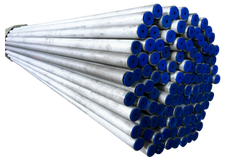
Matt Finish Stainless Steel Tubes Bundle
2. Composition & Material Properties:
ASTM A269 Tubes
Serves as a standard guideline for both seamless and welded austenitic stainless steel tubing, designed for general-purpose applications. This standard covers a wide range of diameters, wall thicknesses, and materials. It is commonly used in industries where corrosion resistance and durability are essential, such as in the food and beverage, pharmaceutical, and chemical industries.
| Materials | Primarily made from austenitic stainless steel grades, including 304, 304L, 316, and 316L. |
|---|---|
| Corrosion Resistance | Excellent corrosion resistance, ideal for applications where exposure to corrosive substances. |
| Temperature Range | Suitable for a wide temperature range, from cryogenic temperatures to moderately high temperatures. |
| Weldability | Easily welded using common techniques, ensuring ease of installation. |
ASTM A213 Tubes
A standard specification for seamless ferritic and austenitic alloy-steel boiler, superheater, and heat-exchanger tubes. Unlike ASTM A269, which focuses on general service applications, ASTM A213 is more specialized and geared towards high-temperature and high-pressure environments. It finds extensive use in power generation, petrochemical, and refinery applications.
| Materials | Available in both ferritic and austenitic stainless steel grades, such as 304, 316, 321, and more. |
|---|---|
| Corrosion Resistance | Offer remarkable corrosion resistance, ensuring longevity in harsh environments. |
| Temperature Range | Specifically designed for high-temperature and high-pressure applications, making them perfect for boilers and heat exchangers. |
| Weldability | Welding process may be more critical due to their application in high-temperature environments. |
3. Stainless Steel Tube Attributes:
The minimum yield strength for stainless steel tube is 515 N/mm² and with maximum 90 HRB of hardness. Maximum 80 HRB is commonly specified so that compression fittings can work well with the tubes. Stainless steel tubes contain at least 10.5% of chromium and it will react with the oxygen to form an invisible chrome-oxide layer. The layer is strong enough to prevent further oxygen from rusting the surface.
SS316/316L is molybdenum-bearing austenitic stainless steel with molybdenum content ranging from 2.0 to 3.0%. The high nickel and molybdenum content provides resistance in highly corrosive surroundings such as salt water or chloride environments. In addition, SS316/316L also provides excellent elevated temperature tensile, outstanding formability and weld-ability.
The stainless steel tubes are produced to two different specifications, TP316 and TP316L, hence they are subsequently referred to as SS316 and SS316L. The means of “L” designation after the grade number is the carbon content is restricted to a maximum of 0.03% where the normal level of carbon content of stainless steel are maximum of 0.08%. The lower level of carbon content stainless steel tubes are used where welding will be performed. This lower level carbon content prevents the chromium from being depleted and thus it can still form the chrome-oxide layer on the tube surface.
4. Material Differences:
| Materials | SS316 | SS316L |
|---|---|---|
| Carbon Content | Contains a higher carbon content compared to SS316L. | Features a lower carbon content, making it more resistant to sensitization and corrosion. |
| Sensitization | Prone to sensitization, which can lead to corrosion in certain environments. | Resistant to sensitization, making it ideal for applications involving exposure to corrosive substances. |
| Weldability | Welding SS316 may result in sensitization, requiring post-weld heat treatment to restore its corrosion resistance. | SS316L is readily weldable without the risk of sensitization, making it a preferred choice for welding applications. |
| Applications | Suitable for general-purpose applications where sensitization is not a concern. | Preferred for applications involving exposure to corrosive chemicals, pharmaceuticals, and high-temperature environments. |
Advantages of SS316 and SS316L Tubing
Despite their differences between SS316 and SS316L, both material still offers the required standards and benefits:
- Corrosion Resistance: Both grades exhibit excellent corrosion resistance, making them ideal for various industries.
- Strength and Durability: They provide robust and long-lasting performance, ensuring the longevity of your projects.
- Aesthetic Appeal: Stainless steel tubing has a sleek and modern appearance, making it a preferred choice for architectural and decorative applications.
- Low Maintenance: SS316 and SS316L require minimal maintenance, reducing overall operating costs.
5. Stainless Steel Tube Finishing:
Tubes are supplied in 3 types of finishing: Annealed and Pickled, Polished 320 Grit, and Bright Annealed. Generally, stainless steel tubes are supplied in anneal and pickle condition. Anneal is a heat treatment that alters the physical and chemical properties of the material; it increases the ductility and reduces the hardness of the stainless steel tube. Pickling is a metal surface treatment that uses strong acid to remove the impurities on the tube surface.
Polished 320 Grit is produced for applications where a smoother finish is required for aesthetic purposes. Bright Annealed is produced by heat treating (annealing) steel with a controlled atmosphere; after the heat treatment, the steel has a reflective, mirror-like appearance.
Stainless steel tubes are also suitable for flaring and cold bending. For cold bending, a bend radius of 3× the external tube diameter is recommended with tube benders or by hand. Tubes made of SS316/316L are suitable for arc welding according to usual techniques. The welding filler should be selected in accordance with DIN EN 1600 and DIN EN 12072 part 1, taking into account the type of application and the welding technique.
6. Outer Diameter and Tube Thickness Specifications:
The tubes outer diameter (OD) are according to ASTM A269/A213. However, for hydraulic applications, a tighter tolerance is usually specified to work well with compression fittings. Tolerance specifications are as per below:
| Tube OD | Tolerance | Tube OD | Tolerance |
|---|---|---|---|
| 4mm to 35mm | +/- 0.08mm | 38mm to 60mm | +/- 0.20mm |
| 35mm to 38mm | +/- 0.15mm | 60mm and above | +/- 0.25mm |
For tubes thickness, A269 and A213 has 2 different type of wall thickness tolerance. For ASTM A269, the permissible variations in wall thickness is +/− 10%. However for ASTM A213, there are 2 options for the wall thickness tolerance. The 1st option is minimum wall thickness which is + 20%, − 0% of wall thickness. The 2nd option is average wall thickness which is +/− 10% of wall thickness.
Our usual option for tubing products wall thickness of tubing are +/− 10% and it will comply to both A269 and A213 standards . Stainless steel tubes manufacturing process will be illustrated in the product literature pdf file below. The table below shows two alternatives to follow for wall thickness tolerance :
| ASTM A213 | Maximum Wall Thickness | Minimum Wall Thickness |
|---|---|---|
| Minimum Wall Thickness (MWT) | 20% | 0% |
| Average Wall Thickness (AWT) | 10% | 10% |
7. Application:
There is a wide variety of functions for Stainless Steel Tubes (SS316/SS316L) which could apply in different industries as following:
- Automobiles
With it's excellent corrosion resistance, durability, and dent resistance, stainless steel tube is becoming more popular in the automotive sector. Moreover, It also contributes to the total weight of the completed automobile. According to the Automotive Stainless Tube Market Size, Share, and Trends Analysis Report, the worldwide automotive stainless steel tube market was valued at USD 3.37 million in 2015, with a forecast growth rate of 3.9 percent from 2016 to 2024. It may be found in a variety of places, including aircraft hydraulic lifts, diesel spark plugs, filter systems, fuel lines, motor block heaters, and car mufflers. - Construction industries
Stainless steel tubes are utilized for filtration in water corporation systems. These tubes are utilized in the construction industry to provide structural support for building projects. In general, stainless steel tubes are critical for various milling machines, production lines, and other applications. - Military and nuclear weapons
Stainless steel tubes are also applied in the manufacture of some military and nuclear weapons. - Household Equipment
With it's anti-rust characteristics, stainless steel tubes are widely used in numerous home equipment. For example, stainless steel is frequently used in gas lines to avoid leakage. Stainless steel tubes are also found in refrigerators and other cooling devices.
8. Methods of bending Stainless Steel Tubes:
Stainless steel tubes could be bent in a number of ways. However, it is a must to ensure that adequate precautions are followed to avoid carbon contamination on the steel throughout the procedure. Using a section bender or three-roll bender is one of the simplest ways to bend this material. This technique is commonly utilized when the metal has a huge radius.
A rotary-draw bender can be used to bend stainless steel tubes with narrow radiuses. In particular, Mandrel Tube Bending is the process of bending stainless steel tubes with a rotary-draw bender.
You should also take into account that a bending error might reduce the surface area of the tubing, making installation more difficult.
For more information regarding stainless steel tubes, please refer to en.wikipedia.org/wiki/Tube_(fluid_conveyance)
← To go back to Pipes & Tubes page
FAQ Of Stainless Steel Tubes
How to differentiate the SS316 and SS316L tubes?
TP316 and TP316L are the two types of stainless steel tubes are categorized. As a result, the names SS316 / SS316L. The letter L stands for "low carbon."
What are the diameter sizes available? What is the standard length for stainless steel tubes?
The diameter size varies from 4mm to 60mm in 6 meters lengths, with the outer diameter size, standard, thickness, grade, manufacturer
name, and heat number continuously marked along the length of the tube.
What are the stainless steel tubes used for?
The SS316/316L tubes are suitable for indoor and outdoor projects in long term usage. They are often manufactured with a variety of finishes, depending on what is appropriate for the project or equipment where it will be used.
What is the stainless steel tube made of?
SS316 tube contains maximum 0.08% carbon while 0.03% for SS316L. Carbon content is at a level of 0.03% maximum in order to be dual specification certified as SS316/316L grade.
How to differentiate the MO2.0 and MO2.5 standards of the SS316/316L tubes?
The MO2.5 standard of tubes adheres to a minimum 2.5 percent Molybdenum content, which improves corrosion resistance. MO2.5 tubes are used in more corrosive applications than standard MO2.0 tubes, such as the petrochemical, oil and gas, and marine industries.
How many types of finishing available for stainless steel tubes?
There are 3 types of finishing available: Annealed and Pickled (AP), Polished 320 grit, and Bright annealed.
What is the recommended bend radius?
Cold bending tubes with tube benders or by hand requires a bend radius three times the external tube diameter.
Specifications
Technical data
| Size Range (Metric) | 4 MM to 60 MM |
|---|---|
| Size Range (Inch OD) | 1/4" to 2" |
| Dimension Standard | ASTM A213 / A269 (A.W.) |
| Material | TP316 / TP316L |
| Working Pressure | As per DIN 2413 I Static Straight Pipe Specifications |
| Finishing | Annealed and Pickled / Polished (320 Grit) |
| Origin | Japan / China |
Downloads
Catalogues & literature
Watch
Product video
Having a hard time finding the right parts?
We stock 15,000+ line items and can source specials nobody else can. Get a quotation within 2 hours.